Showing posts with label calm. Show all posts

Sunday, 13 November 2016

teach mindfulness meditation in hospitals!


I believe that we are in the midst of a changing culture within the NHS. At work, I see burnt-out staff, stress levels as high as ever and clinicians struggling at times to deliver the care they really want to give to their patients. At the same time I see a high demand of patients who are urgently in need of care, but are also sometimes not prepared to take ownership of their health. Some see that it is up to the NHS to "fix" them. This belief contributes to the pressures the NHS faces and so it sometimes appears to resemble a tug-of-war between staff and patients set within the political arena, stoked up by the media and fanned by disillusionment, thereby increasing frustration and stress within the workforce and fear and unrealistic expectations from patients. This has to change in order for the NHS to survive into the future. Notice I am not going to get into the politics, here - that's for another post! :)
For me, as a nurse and as a mindfulness coach, I want to help facilitate positive change within the clinical environment. I passionately believe that teaching staff to connect with themselves through mindfulness meditation will benefit not only the individual, but their colleagues and the patients, too. Teaching mindfulness meditation to patients to help them with anxiety, pain, phobias or other emotions in a clinical environment could have far-reaching benefits for them and create a different atmosphere at ward level, which will have a positive effect on others.
I have written a one-day course as part of my Connected Kids™ training for healthcare workers who work with children in the clinical setting (ward, outpatients, theatres). This course will teach staff about mindfulness, meditation, how to apply to their practice as a tool for implementing care and will teach them how to write and deliver their own scripts to their patients.
If you are interested, please get in touch with me at innerspaceproject1@gmail.com.
Please do share with your NHS friends, family and colleagues!

Friday, 18 December 2015

Muuum, I Can't Sleep!


“Muuum, I can’t sleep!”
I’m sure every parent in the land hears that at some point. It’s easy to get frustrated when repeated efforts to get your child to stay in bed and go to sleep fail. But how do you feel if you have a hard time getting to sleep? The chances are that your child is feeling the same way.
If all attempts to get your child to doze off fail, ask your child if there’s something on their mind they’d like to talk about. Sometimes it might be a repetitive thought, word, song or an event that had occurred during the day, which your child might, for whatever reason, be struggling to let go of. At night, we are most receptive to our thoughts (positive and negative) because things are generally calmer and quieter. Writing stuff down in the form of to “to-do” lists, journaling or even sketching can help adults, so if your older child is really struggling, why not ask them to write all their “inside words” on a piece of paper or draw what’s on their mind, then place it in a box, or fold it and put away to read another time?
Once this has been done, deliberately soften your voice and talk slowly, to help your child hear the relaxed tone in your voice (as frustrating as you might find it that you want to get on and do your own thing when your child is in bed, shouting at them will be counter-productive and you will be in your child’s room for longer, or they will become more unsettled). Asking them to lie in the bed and get cosy and snuggle conjures up images that the child is likely to respond to. Then ask them to breathe in and out slowly, have a big yawn to let any excess energy go, and ask them to count their breaths back from 5 to 0, relaxing different parts of their body as they go (you will need to adjust this depending how old your child is).
It’s also important to tap in to how you are feeling, being present in your mind and acknowledging your own feelings to release. Sometimes we have to forgo our own needs to help our children, as hard to accept as that might be. Having spent years of “shh-pat-ting” my babies and toddlers (and tweenager!) to sleep, I know how hard it can be to stay calm and not allow frustration to get the better of me when I haven’t stopped all day and want to relax. But as the saying goes: “this too shall pass!” Here is some useful information about helping children 
sleep
What are your mindful, gentle tips for helping your child get to sleep?
I teach children mindfulness and meditation. Please contact me to book a session or to find out more. Innerspaceproject1@gmail.com

Mindful Walks

One sunny Sunday in May was perfect for some mindful walking up at Durlston Country Park in Swanage. We are blessed with breathtaking views of the Jurassic Coast, beautiful meadows and fields, and a multitude of wildlife, here: the perfect backdrop for some mindfulness and meditation. We took off our socks and shoes, (when was the last time anyone did this as an adult?)  lay in the grass and walked mindfully alongside the meadow, rich in colour and beauty. So much to feed our senses, cultivate inner peace and connect with that which supports us.
My gift to everyone who came along was to leave feeling contentment, joy and happiness. I hope that this gift was received as intended. People certainly left looking relaxed and happy!
Thank you to Dave Pratten for your help and to Ali Tuckey,  the Durlston Country Park ranger for organising the events, and to all who came along. I ran a further two sessions in the park, which were enjoyed by all. 

The next Mindful Walk  is on Sunday 13 March 2016 at 10.30 and costs £5. Booking is essential, contact Durlston Country Park on (01929) 424443 or
info@durlston.co.uk

Pressure


Imagine the scene: You are out shopping with your young children. You are in a busy shopping centre: it’s 2pm on Christmas eve; it seems as though the whole world is within the confines of the hot, crowded space. People are jostling around you; conversations heard between one person and the next as you pass echo the thoughts in your head: “I still need to buy 3 more presents, I also need to get sprouts and toilet roll and I’ve only got an hour before the stores close”.
You feel hungry and thirsty but you don’t have time to stop. Your children are over-excited, and aren’t listening to you as you instruct them to stay with you, so you are constantly keeping an eye on them. They frequently stop to look at shop windows, fully-laden with enticing-looking toys designed for maximum pester-power. One child points at something and asks if they can have it. When you say “No” a fresh round of questions and pleading ensues. Meanwhile, the swirl of shoppers around you distracts you from your other child, who has been swept along somewhere. You can no longer see them. Heavily laden with bags, you grab the child who is still pleading for a toy, as you feel the mounting panic reach maximum. You have lost your child in the busy shopping centre on Christmas eve.
How do you feel?
Imagine that…
…You feel hot and sweaty.
…You feel dizzy and your mouth is dry.
…You start shaking.
…You can hear a buzzing in your ears. Your head is throbbing.
…Your arms feel weak with fear and the weight of the bags you are carrying. Your legs seem to have turned to jelly.
You can hear yourself shouting your child’s name, but the noise around you and the sound of the buzzing in your ears begins to drown out other sounds.
You must find your other child.
You feel the panic rising in your chest and stomach.
As you look frantically around you, you catch sight of your crying child just ahead of you, being comforted by a stranger. You run to them, grab your child and hug them in relief. You thank the stranger, who leaves you to join the swirl of the crowd.
How do you feel now, and what do you do next?
OK, so this is an extreme scenario, but I designed it to give you a chance to really feel the physical effects of what you were asked to imagine. Did you feel any of the effects? Well, I can tell you that if you felt any of the panic or fear rising within you during the scenario, then it is possible that you can just as easily feel relaxed and calm if you were to imagine a different scenario:
Begin by sitting comfortably. Place your hand on your tummy. Close your eyes, or focus on something directly in front of you. Notice your breathing, and after a few breaths, take the breath deeper into your lungs, down towards your hand. Feel the hand moving outwards as you fill your lungs with air. As you let the breath out, don’t force it, just allow it to happen. Wait for the next breath to come in, slow and lengthen it as you take it to your tummy.
Now imagine It is a sunny day in the park or in your garden. You are standing barefoot on some lush, green, warm grass. You can feel the blades of grass between your toes. The warmth of the grass permeating the soles of your feet. The ground is supporting your feet as you are standing still, listening to the sounds of birds in the trees, the gentle rustling of leaves in the warm summer breeze, bees nearby humming as they pass from flower to flower. The warmth of the grass on your feet as you stand still and listen. The warmth of the sun around you gently blessing your skin with a relaxing touch that reassures you that all is well in this moment.
Imagine that warmth throughout your body. Sit quietly and soak it up for a few minutes.
Then, when you are ready, take a few deeper breaths and say to yourself “all is well with me right now” before you open your eyes. Smile to yourself.
How do you feel now? I must say at this point that if you found this harder than the stressful scenario, don’t worry! The chances are, that if you are affected by stress, it is because your brain expects stress and responds more readily than the measures you can take to feel the opposite.
That’s why regularly taking some time out to meditate can have a beneficial effect on the brain. When we feel stressed, our body releases stress hormones which causes our heart to beat faster, our breath to become shallow and fast, and our blood pressure to increase. Focusing on the breath and being “in the moment” has been shown to reduce blood pressure. Another study showed how meditating before a stressful event had a beneficial effect on stress levels, even in those who had never practised before. And if you are a multi-tasker, frequently changing tacks increases stress levels, but one study showed that meditating decreased stress and increased effectiveness of tasks with increased concentration levels, as well.
My post from yesterday explained how to differentiate between a healthy state of mind, to recognising the need to reset before reaching panic mode, or hitting the emergency button.
So here are just a few benefits of practising mindfulness and meditation. A key to success is finding what works for you, as there are so many different disciplines. As a nurse I am using meditation techniques with my patients in various situations to help them, with interesting and positive results. I can also vouch for myself as a practitioner of mindfulness and meditation – from boiling an egg, to running up a hill or overcoming insomnia, there is a place for these techniques in many aspects of life – with great results!

Nikki Harman is a nurse working in the NHS; and mindfulness and meditation tutor to adults and children. Contact innerspaceproject1@gmail.com for more information about courses or sessions either face to face or over Skype.

Set-Up or Up-Set?

An essential part of being mindful is being present with your thoughts and feelings at any given moment. Some people regard mindfulness and meditation techniques as having to be clear of thoughts, have an empty mind, and be at peace. Whilst there is an element of this involved, this tends to come about as a result of practice. Even then, learning to be at peace with your thoughts and feelings in the moment, rather than having an empty mind, is key to being mindful.
It is not always possible to have an empty mind! The difference between being preoccupied with the thoughts and emotions buzzing within you, and the ability to observe the thoughts and emotions you are feeling, lies in how you perceive them. Learn to tap in to your feelings in a situation. Ask yourself if you feel that this is a healthy state; do you need to reset; or if there is an emergency brewing:
healthy: Being at peace in the moment – feeling calm, in control, happy with what’s going on within/around you
reset: Noticing that you are feeling uncomfortable, agitated, stressed or other emotions which are having a negative effect on you or those around you, and taking mindful steps to set up to a healthy state of mind again
emergency: have you hit the “panic button” – feeling out of control, scared, angry, or other emotions that are making you feel on high alert, impacting on your behaviour and thoughts
Being in the healthy state doesn’t necessarily mean having an empty mind: it means being able to accept the thoughts that you are experiencing, without allowing the attachment of emotions to dominate how you react to these thoughts. In other words, learn to separate the feelings associated with a negative thought. See the thought as a cloud, or imagine you are looking at the picture as an observer, rather than being drawn into the drama of the image or thought. Learn to feel at peace with the thought.
If you sense that your peace is becoming upset, pay attention to how you have set-up the situation. What do you need to change to feel healthy in your mind, again?
Don’t hit the red button: Hit the reset button, instead!
Nikki Harman is a nurse working in the NHS; and mindfulness and meditation tutor to adults and children. Contact innerspaceproject1@gmail.com for more information about courses or sessions either face to face or over Skype.


Planting The Seeds


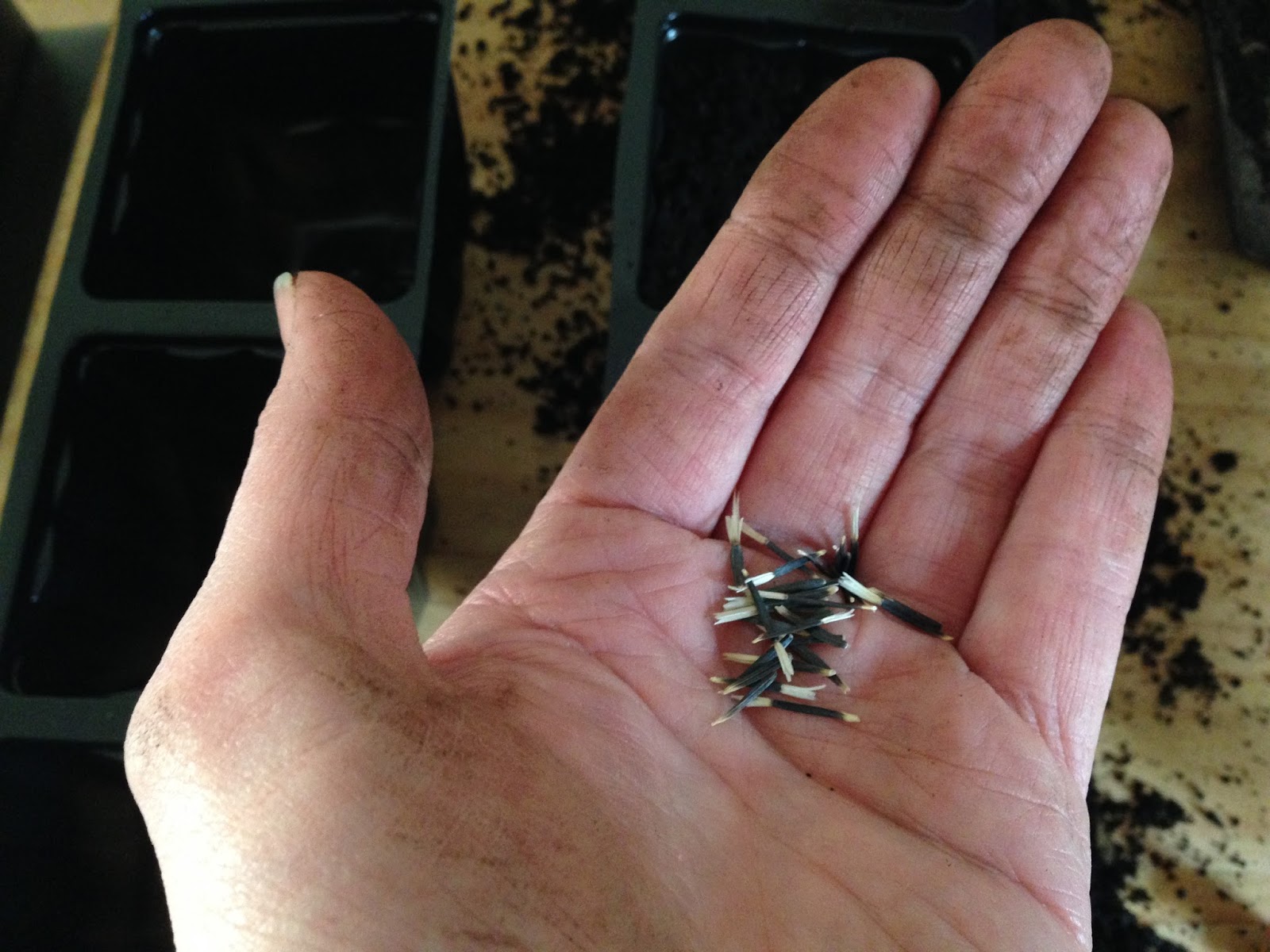
 My beginners mindfulness group were asked at the beginning to sit quietly for a few minutes. In this time, once they had begun to settle in to the session, I asked them to feel a sense of love for themselves at that moment and feel the sensation grow from their heart outwards. Then I asked for them to feel a sense of peace. Connecting the sense of peace and love (there is a hippy inside us all) I asked for each individual to consider a positive intention (a goal to work towards) for themselves; and lastly, to connect this sense of peace and love with the goal or intention. After a few moments the group were asked to choose some seeds to plant into a tray, all the while remembering the intention, as well as maintaining or re-creating the sense of love and peace. Then, to visualise the seed growing, changing, sprouting shoots and growing into the flower it will become. In this flower is embedded peace, love and the happy goal or intention. Each person was asked to take their seeds home with them, to nurture them as they grow and each day sit for just a few minutes, re-creating the sense of peace and love, even connecting with their seed. Today was about planting for peace. Imagining the plant sending out the peace and love through the roots and into the ground, to spread beyond ourselves and lead to others.Yes, this may all sound very hippy, but there is a point to this. The plant is a metaphor for a goal: the goal (intention) is to bring about positive change in the individual. By nurturing the seed (watering it, maintaining just the right conditions for it to grow) the plant has a much greater chance of survival. By feeling a sense of love for the seed, the love is actually for the self – an unconditional love with which to grow the individual’s self-belief and desire to succeed in their intention. Setting an intention gives the plant a deeper meaning. Feeling motivated to succeed and practising the commitment to succeed is a self-fulfilling prophecy. The plant is receiving the individual’s energy through the commitment to preservation.This exercise is loosely based on Metta meditation, a Buddhist practice which focuses on love of the self; love of a friend; love towards someone the individual doesn’t know/know well; sending love to someone the individual doesn’t like; and finally, sending love out to the individual’s community/the world. It is a powerful exercise, one which can invoke all sorts of emotions – positive and negative – but when practised regularly, it can harbour greater coping mechanisms in everyday life, particularly if the individual faces conflict in any aspect of their life; but can have a positive influence on self-esteem.So get planting for peace and love in your life and in your neighbourhood!

Wednesday, 3 December 2014

A Moment


In the quiet of your mind, in the silence of your thoughts, you can be completely with the moment. There is no judgement in the present: the presence of your mind simply allows you to drift through, second by second.
In each second, a murmuring of thoughts or ideas can rush to you, consume you, engulf you; or you can choose to acknowledge the burst and see it wash over you, or pass you by like a cloud in the sky. See each thought as a gift to yourself: the process of thought is one that only you can control, and is yours to accept and allow to pass by without judgement; or one to hold on to and keep. It is not for I nor another to tell you how to use this thought, it is not for me to tell you how that thought will affect your whole Self.
The gift is not really in the thought, but in the deed of your own action, and the consequences once the choice has been made.
 The gift is not in the action, but in your own Self, because you are your own thoughts, you are your own deeds, you are your own consciousness.
The gift is your life, of which You Are. You are the Life, you are your own Truth, you own your own Path.
As you live each day, be the one you long to be. Be the kindness you want to see in others; be the love you want to feel. Love yourself unconditionally as you love others. Be as gentle with yourself as you would be with a newborn baby, and feel that soft connection of who you are within.  Walk each moment knowing that you have created that step in your whole self, putting one foot in front of the other, as well as the steps in your mind as you act out your thoughts and decisions. Just be.


So in each passing moment, be accepting of who you are just in that second, holding no judgement of the thoughts that come to mind, but live it knowing that these thoughts are the essence of who you are. 

Wednesday, 29 October 2014

Mindfulness in hospital

Last week, I reached a milestone for my work. I ran a taster session for staff at the hospital where I work as a nurse, under my business as The Inner Space Project.
It was a seemingly small step, but I was so excited about it. For a start, more people than I had expected wanted to come along and find out about it. The session seemed to go down well with those who had come along, and crucially, they want more! I taught a series of activities based on focusing and visualisation, and ended with a relaxing meditation. I got some appreciative feedback, for which I am grateful for. It was a great session!

You see, I believe my role in nursing goes much deeper than the clinical everyday nursing stuff - this is important, don't get me wrong. But I want to weave the deeper stuff into my work, and I believe that others can do this, too, and have a positive influence not just on themselves or their patients, but within the department they work. I am full of ideas about how I can bring my clinical practice and my mindfulness into alignment, and use accordingly - and I am chomping at the bit to get it going!

The deepest thread amongst everything I do as a nurse (and in life) is to form a connection with others, and teach them to do the same, but also connect with themselves. I feel that our own inner voices often sabotage our good deeds to ourselves, and if that's happening on an internal level, it is being reflected externally, as well. At the centre of everything, the most important things to remember, are that we love ourselves, we are gentle with ourselves, and we forgive ourselves. If we can turn down the white noise, the noise that jeopardizes these kind and essential deeds, then we can start to influence others in the same way. What happens after that is connection, fulfilment and joy. A crazy, hippy ideology, maybe - but who says we can't try?!

If you'd like to find out more, please contact me at innerspaceproject1@gmail.com

Friday, 3 October 2014

pill-popping or hearts and minds?


Today's news has included an article about a new pill for men and women who drink excessively, to help them reduce their alcohol intake. It has made the headlines and induced discussions in the media, with the slant of being a new "wonder-drug" that will help many people.

That's great, isn't it?

Yes, it is great,

I don't think there is anything wrong with taking medication. I am a nurse, so I spend a great deal of my time administering tablets, medicines, drips and antibiotics to help make the people I look after, better. This is fine.

But...

I do also feel that as a society, we are easily swayed by medications to combat illness. We are conditioned to believe that a pill will make everything better, again. I find myself telling my children that "this medicine will make you feel better", or telling my patient, "this tablet will take the pain away", or "this antibiotic will kill the bug you have". Yes, they may well do, and invariably, that is what happens.

But...

Why do we think that we are only capable of fixing ourselves with a pill? What is it about our fixation with medicines to cure all ills? As a nurse, if I have a patient who is agitated, anxious or confused, the planned route would be to speak to the doctor to get a tablet to calm the patient down.

But...

With increasing frequency, I am using mindfulness techniques in my clinical practice to help my patients. I have had some surprising and successful results, from children to the elderly; from the scared and confused to the acutely ill, climbing-the-walls-with-pain patients.
For example, about a year ago I did a shift in A&E and was looking after a very scared, confused elderly lady. She did not know she was in hospital, and was desperate to go home. She had fallen at home and was very unsteady on her feet in the department, which was dangerous because she repeatedly got up from her chair to try to find her way into the cold, wet morning in her dressing gown and slippers. I sat down with her, did some breathing and focusing work with her, and then did a 5-minute meditation with her. As she relaxed in her chair, she settled, and then dozed off! In the time it would have taken me to either speak to a doctor about getting something to make her less agitated, or tried to get her to sit in her chair by telling her where she was, what had happened to her, and answered the repeating questions, thereby increasing her agitated state, I had simply taught her to relax her body and her mind for long enough for her to fall asleep.

So...

It works! So much so, that I am taking this further, starting with teaching mindfulness and meditation to my colleagues and other staff at the trust I work in.

Coming back to the news today, though, makes me feel a slight disappointment. Not because I don't think the tablet will work, as it sounds very effective; but because it compounds the all-round belief that we can only be fixed with conventional medicine. It reinforces the increasing belief in our society that the NHS can be relied upon to fix everybody, and it increases the "clinical" perception that society's health can only be managed "clinically". We are generally losing our ability to see things more holistically, that there can be some other frameworks that support an individual to take better care of themselves, manage their existing conditions as a "bundle" of care rather than singularly; and that by teaching people to connect within to understand why, for example, they feel the need to drink 3 pints of beer a night, they might be able to reduce their intake and feel healthier as a result.


Friday, 5 September 2014

Zen and Jam

I was given a windfall of plums, this week, by my friend the Jammy Bodger. Today was my only chance of getting some jam made, as some of the plums were starting to look a bit mouldy.
I love making jam. But I make such a horrible, sticky mess that the processes of washing up, and scraping dried jam juice from my oven and pans take the edge off the occasion.
Today was no exception. Well actually, it was an exception, because today I made more mess than I've ever made, before. I let the pan boil over; the bowl I used for the stones and the skin wasn't big enough, so plum juice dripped down the sides, onto the worktop, and down the cupboard door.
For a while, I wondered why on earth I was creating such chaos for myself, when normally, I would at least try to keep things organised.
Eventually, I realised what I was doing; I was inappropriately multi-tasking, resulting in something Not Quite Right. Whilst the plums were bubbling away, I went off to do some jobs on my laptop, in another room. One of the jobs on my long to-do list for today involved making a phone call. The phone call reminded me that I needed to send someone an email; and when I opened up my email inbox I found 3 emails I needed to respond to. In the midst of this, I could hear my oven timer beeping, telling me it was time to dredge the skin and stones from the bubbling pan in the kitchen.
So then, it was no wonder I was finding the process of making jam very frustrating; the emails I needed to take action on seemed difficult to do; and my to-do list was starting to annoy me, with my inner voice sarcastically mocking me: "Ooh, you think you're so clever with your list-making, why not add to the list just to prove how much you can do in a day!"
After an hour of pacing up and down the hall between laptop and sticky pan, I decided enough was enough, and focused on the one task. The jam-making. But I found myself rushing, trying to get on to the next task, whilst separating plum stones from flesh, and making a terrible mess of it. My patience was starting to wear thin.
At this point, I stopped, and thought about what was happening. Today I have had some big challenges to deal with, including life-changing decisions which I'm now following through on; the to-do list had to be completed, it couldn't wait until next week because I'm back at work; the jam needed making before the fruit rotted away; and it's Friday. Fridays are supposed to allow me to be a bit more gentle with myself, instead of over-analysing, over-reaching, and doing too much at a time. No wonder I was feeling impatient.
I changed. I took a deep breath, and completely focused on those plum stones. I had over 3Ibs of plums to go through, which were checked carefully before placing back in the pan. I ignored the mess, I'd clean it later. I just concentrated exactly on the task in front of me. I began to enjoy it. A sense of fulfilment about completing the task filled me, and at the end, I had a taste of the fruits of my labour: not too sweet, slightly sharp, and with a hint of spice.
That pretty-much sums up my Friday!


Friday, 15 August 2014

Spark or Sparkle? Get connected!


I've been reading the latest reports on what's happening in our world, this week. Ebola; the conflict in Gaza; Syria; Ukraine and Russia; misguided/greedy/clueless politicians around the world making decisions affecting their country and not listening the the masses; then there's the rising obesity, cancers, poverty, famine, the global economy; the death of Robin Williams. All of the above interspersed with adverts trying to influence what car I should buy, what I should be wearing, where I should be holidaying, and how to be thin. Social commentary on facebook/twitter about the above, and the radio making sure views are adhered to. Or to give people a chance to rant about a subject. No wonder I'm feeling glum. In the time it's taken me to even type this list, I'm feeling lower than before I started.
This can't be how life is supposed to be...is it? Are we all hard-wired to strive for our own individual wants, over and above what others needs are? At what point did the human race move from looking after their basic needs - as being satisfactory to a happy life - to tearing apart someone else's to satisfy one?
 I know this is not the case: the outpouring of grief over Robin William's apparent suicide has been immense, and why? Because he was a fantastically funny human being, who demonstrated his ultimate fragility. A fragility which exists inside all of us. His death has struck a chord with many.
What's happening in the middle east is becoming a prominent news feature every day, and as such is no longer hard-hitting. A couple of weeks ago, whilst eating breakfast in a hotel dining room, the TV was showing the BBC news and weather. As the news items rolled, it reported the latest death toll of the Palestinians: nobody moved. Nobody watched the item. Heads down, shovelling in their food. A moment later, and the weather forecast came on the screen: heads swivelled to watch in anticipation of how hot it was going to be, and whether raincoat or sunscreen would be required, for the day. A hush fell in the room. As soon as the report had finished, people went back to eating. How can this be? Is this English-ness? Is this apathy? Is this a tolerance thing? Is it tolerable to hear how children are dying because of an arguement over land and religion as a means to power and control? I feel the answer to this is "yes" - because we are flooded with the news all the time. We are becoming hardened to war atrocities, because it is something happening far, far away, and it doesn't affect us, at all. Does it?
You know what? It does! It bloody well does, you know. Why?
The fact that someone is more bothered about the weather in their town than fighting and killing going on in another part of the world, is a worrying symptom of how our societies are becoming disconnected with each other. My ability to continue to empathise and feel the need to help relies on my emotional intelligence, that which lights me up inside. How would I feel if I were in a refugee camp in Syria with my children? Not being able to go back to my home. How does it feel to be too scared to leave the house for fear of being raped, killed, or arrested? How does it feel to bury a child? How does it feel to lose everything in the blink of an eye? How does it feel if I forget my umbrella and it rains because I didn't listen to the weather report that day? I get wet: so what?
The thing is, it seems that there are more people who are willing to loudly complain about getting wet before they go home to shower and change into something warm and dry, than those who are shouting about the injustice in the world, and who are prepared to hold out their hand to help a fellow human being. A disproportionate power who want to seek revenge and kill, in comparison to those who are prepared to connect with themselves and others, and find out what has made them feel that urge and make a change. That's why we are all affected by apathy or a lack of empathy. I know that there are movements, campaigns, and positive ways in which social media is helping to influence societies and governments and those in power, but we need to make more of a connection with what's going on in the world, and pay attention. We are all affected in some way by the actions of others.
I was waiting to pay for my food in the supermarket a few days ago, where the store is being refurbished. It was quite busy, and there was an older couple behind me getting really cross and complaining about having to wait to pay for their trolley full of items, despite a free till which was for "baskets only". "So what?" I thought. "The man at the till is doing his job. There are a number of people walking around with baskets, and a larger number with trolleys stacked full of food".
The woman started to raise her voice in annoyance at this, referring to the "stupid idiot" at the till who had refused  to serve her. I wondered whether the young assistant had heard her, and if so, how he would have felt to be insulted like this. I made eye contact with her. The woman continued to complain. I smiled as I listened, then said, "Ah well...never mind. Let it go! There are worse things going on in the world, right now! A few extra minutes queueing won't do you any harm." She stopped in her tracks, took a step back from me, then whispered, "You're right. Of course not." She was so wrapped up in her own head, thoughts, irritation, that everything else had become insignificant. But given an opportunity to see another view, she made a connection with her own feelings, and realised that it didn't really matter, in the grand scheme of things. After I'd paid for my food, I went up to the woman, and wished her a lovely weekend. She smiled back at me and wished me the same. Ta-da! Connection made: spark turned into sparkle. Job done!

This is what this blog post is really about: taking a moment to step back from a situation and connect with your self. Just a moment to track what's going on, back to the "spark", and decide whether it is a sparkle to light your inner glow (that which makes you shine); whether that spark starts an unstoppable fire (that which provokes a sense of a need for revenge or retribution); or whether that spark should be extinguished before it causes any damage (the awareness of negative feelings and acknowledgement  before letting them go without consequence). And if it ain't gonna make you shine brightly enough for others to see and share their light with yours, then don't set the sparks off in the first place. As Ghandi said, "You must be the change you want to see in the world".

Wednesday, 23 July 2014

One Step At A Time

This photo represents how I try to view each day: I can only experience each part of my day as I reach it, one step at a time. I can start my day by looking at what's immediately in front of it, and so react to it accordingly. I am aware that the rest of the day stretches ahead of me, but I can't experience it and know what will be until I reach it.
One Step At A Time.
There is movement around me, there is a flow, a current; but I choose to take things One Step At A Time. I can look ahead, but not cannot reach it without taking those steps, first. Each step will feel different to the last. A different perspective, a different feel to it. A different moment. I can look behind and see the steps I have made, and although they may matter, they are no longer important in this very moment.
In other words, when I wake up in the morning, I deliberately stop myself from dwelling on the day ahead. It just makes me forget to live in the moment - that first satisfying yawn and stretch after waking, listening to the sounds outside my window, the noise of the outside world, mixed with the sounds of me: my breathing, my voice, my rumbling, empty tummy; my children laughing and chatting. The light straining through the curtains, the feel of the bedclothes, the warmth I am surrounded by. These things and more make me feel so grateful for the day ahead - whatever it may bring. Why spoil the moment by bringing in the stuff to come several hours away - be it good or something to stress about - when I could just enjoy those first precious moments of a new day? Being mindful of each step - from brushing my teeth (I feel so grateful to have healthy teeth, a toothbrush, toothpaste and fresh, clean water), eating my breakfast (delicious toast and tea, tasty fruit), chatting with my children (admiring their growing brains, personality and the unconditional love we have for each other), and so on - experiencing each step to its fullest potential, and enjoying myself, is a key to feeling happy, connected, and contented in my life.
Believe me when I say I have bad days - don't we all? But taking those steps to get from one end to the other when experienced as fully as possible, in connection with ourselves, with others, and with our environment makes everything more of an experience. And if we can try to weave in some gratitude for ourselves and others, and share in the fullest joy for the great stuff that happens to ourselves and others in our day, isn't that worth getting up for?


Sunday, 29 June 2014

Meditating Play


I love these big bowl swings. I find my inner child coming out to play whenever I'm near one: there's nothing like sitting in the swing, and the feeling of swaying back and forth through the air. Today we went to the park for a play, and opportunistically, I gave a guided meditation.
Being comfortable, lying in the swing, and being aware of the feeling of the pull of the earth as the swing sways back and forth. The body being pulled down and up as the swing moves. Breathing easily and slowly, in time to the sway. Closing the eyes, to really experience the feelings of movement; and that barely perceptable pause before the swing moves in the opposite direction. Each sway is a moment in time. Experience that present moment, before it's gone and replaced by the next. Like a clock ticking: tick...tock...
Each moment is different to the next. Each sway is slightly slower, slightly shorter. A fraction of time slower. As the swing continues swaying, so the present is ever changing, so the moment is different. Focusing on each moment. Each sway leaves a greater feeling of calm, of peace. Relaxing into the seat. A constant change. A constant movement, whilst the body stays still, the mind is quiet. Feeling the body react to each sway, slowing down...slower...slower...almost still. Quietly resting, a tiny movement in the swing. Calm, slow breaths, calm, quiet mind. Peace. Being held in the air, supported by the swing as it gently moves in the breeze. Quietly resting in body and mind, feeling calm and peaceful. Happy.